02 / Software tool

KANJI BRANCH STUDY

Kanji Branch Study is a Japanese kanji learning tool planned, developed, and operated by TOKUNAGA Co., Ltd. Learners enter the reading of a displayed word, then choose one of its kanji after a correct answer to continue to another related word. The interface can be switched between Chinese and English, while readings, vocabulary, and review targets remain connected in one learning path.

Try the learning tool

PURPOSE

Who it is for
and what it addresses.

Background
The project was created to provide more memory cues than isolated flashcard questions by following words that contain the same kanji. The tool is publicly available, and TOKUNAGA Co., Ltd. continues to improve the learning screen, classification labels, and missed-word review experience.
Intended users
Japanese learners from beginner to advanced who want to review kanji readings or remember vocabulary through related words
Purpose
Provide an exploratory learning experience that moves from one word to another through shared kanji instead of relying only on isolated memorization. School-grade and JLPT N5-N1 labels help learners find a suitable practice range.

LEARNING GUIDE

A closer look at the learning content.

01 FLOW

Learning flow

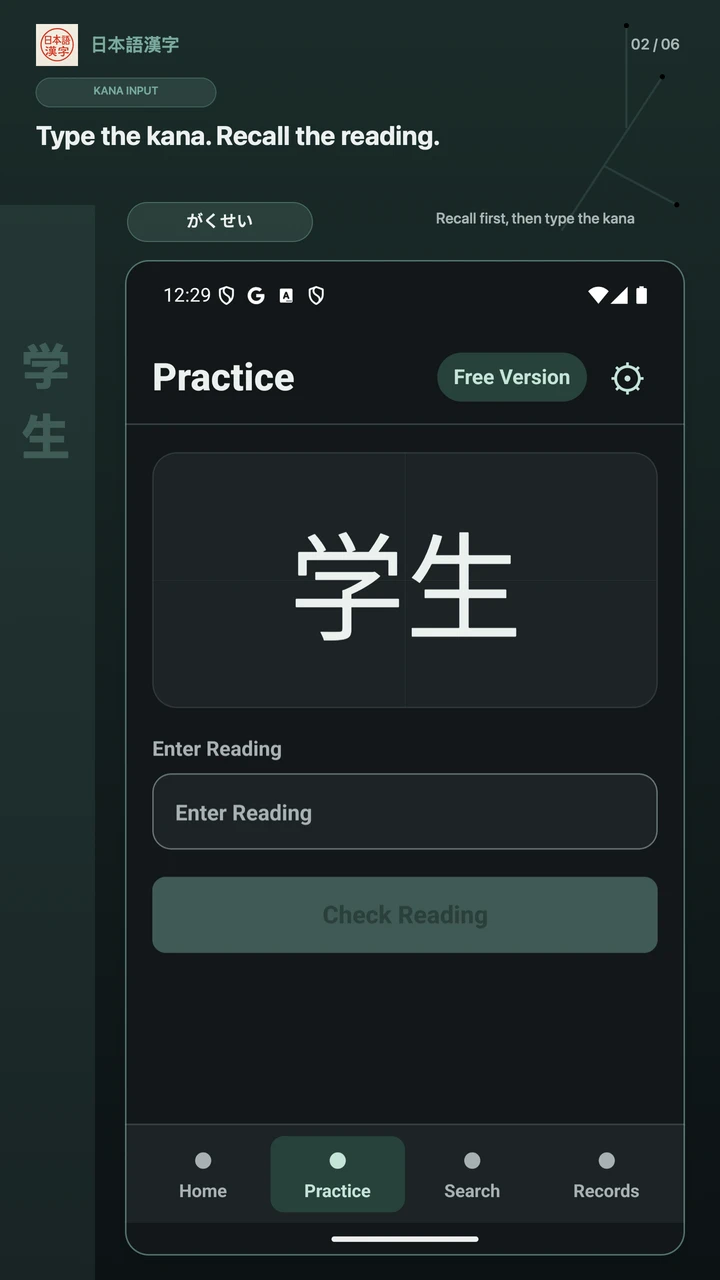
First read the displayed Japanese word and enter its reading in hiragana. After a correct answer, choose one of the kanji in the word to continue to another word containing that character. Words answered incorrectly are recorded so they can be practiced again.

  • Enter the reading and check the answer immediately
  • Choose a kanji after a correct answer and branch to a related word
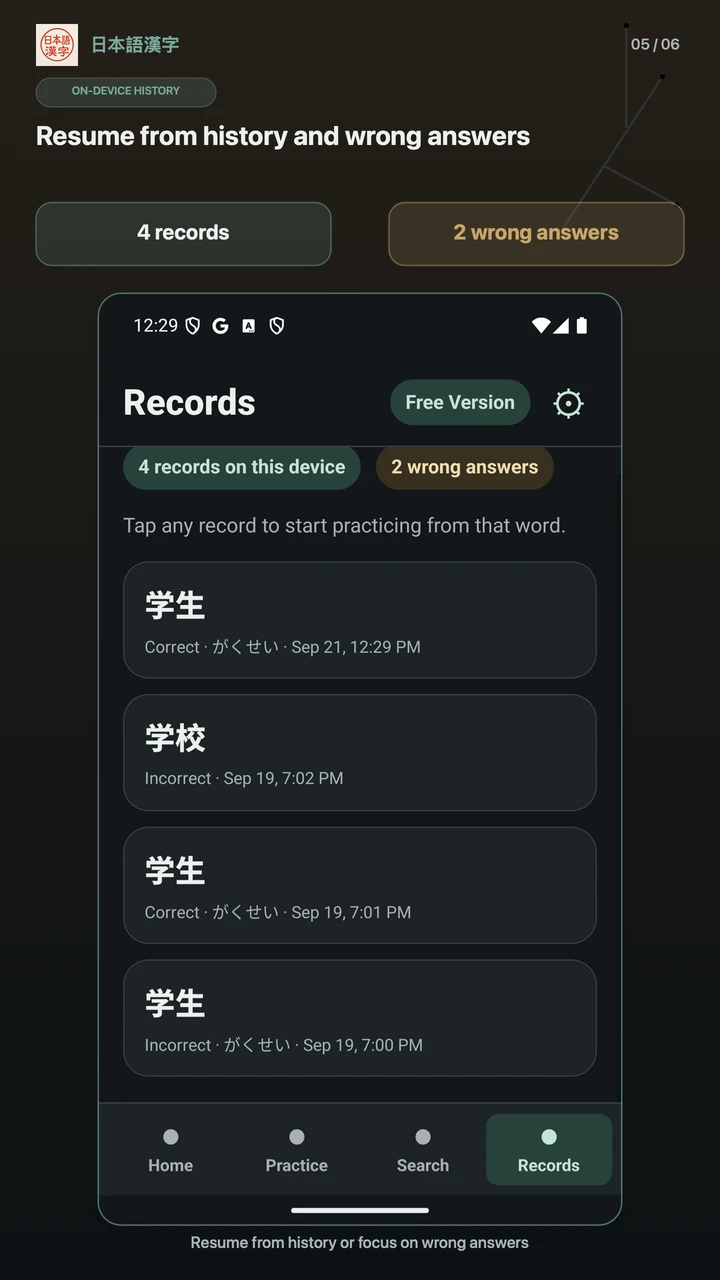
  • Return to missed words for focused review
02 METHOD

Learning through kanji branches

The tool does not present kanji only as isolated characters. It branches into words that contain a shared kanji. Moving from a correctly read word to another related word connects readings, vocabulary, and memory cues.

  • Use a shared kanji as a memory cue
  • Keep connected vocabulary as a visible learning path
  • Use the method for beginner reading practice or advanced vocabulary review
03 RANGE

Practice ranges and labels

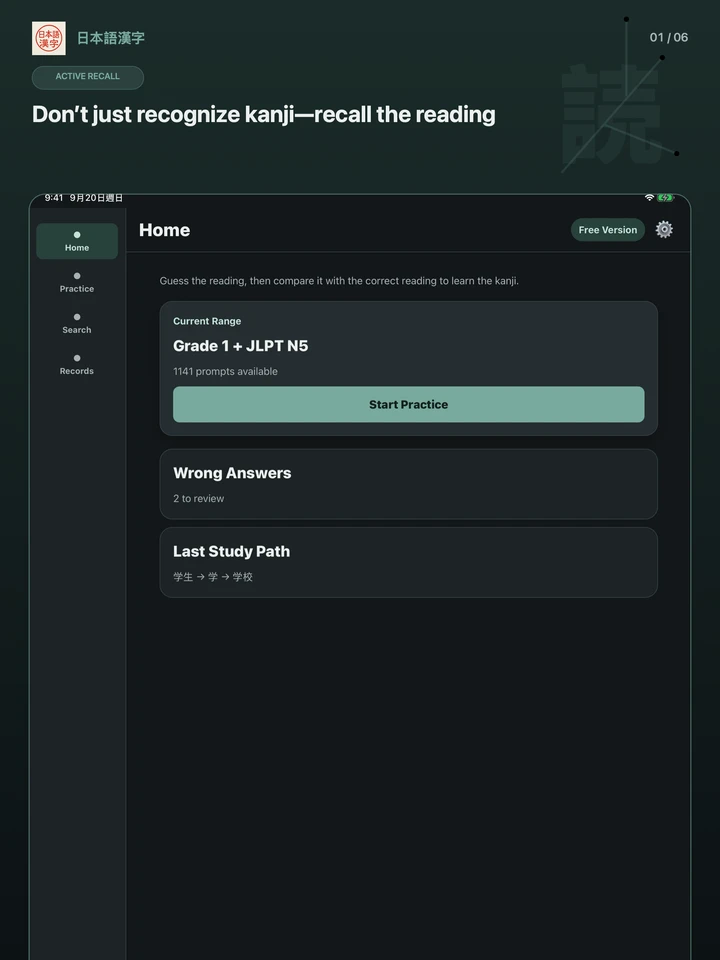
Practice words include school-grade references and supplementary JLPT N5-N1 labels to help learners select a suitable range. JLPT labels are study aids and are not presented as an official complete test list or a passing standard.

  • Use school-grade labels as a reference for basic kanji
  • Use JLPT N5-N1 labels as an approximate difficulty guide
  • Treat all classifications as learning aids rather than official complete lists
04 DATA

Data and operation

Vocabulary and reading information refers to public dictionary data including KANJIDIC2, JMdict, and JmdictFurigana. The official guide pages and learning tool currently do not display ads. If ads are considered later, they will only support continued operation of the free learning tool and must not obstruct learning.

  • Vocabulary information based on KANJIDIC2, JMdict, and JmdictFurigana
  • Continuously operated by TOKUNAGA Co., Ltd.
  • No ads are currently displayed

REAL TOOL SCREENS

Screens from the Learning Tool

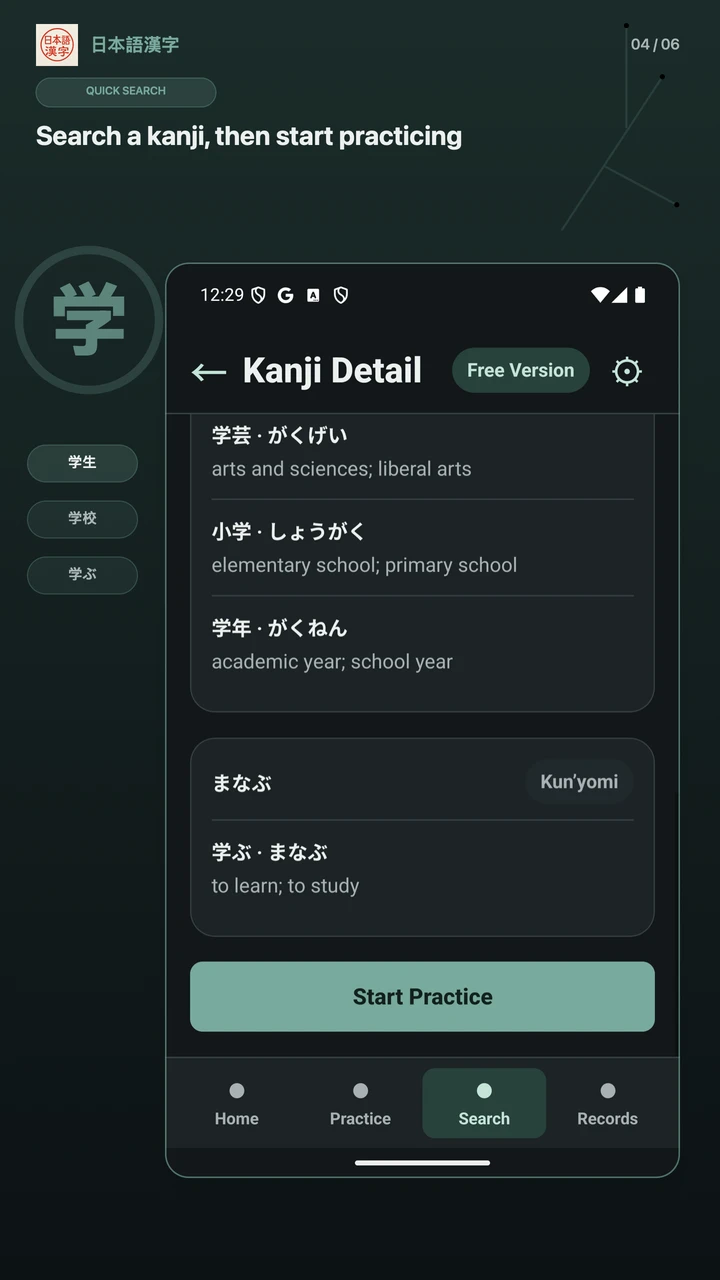
These screenshots come from the currently available learning tool and show practice range selection, reading checks, learning paths, and missed-word records. The interface supports Chinese and English while the learning content focuses on Japanese kanji and vocabulary.

Kanji Branch Study practice range selection screen
Select a practice range and classification mode before starting.
Kanji Branch Study reading check and kanji selection screen
Enter a reading, check the answer, and select a kanji to continue.
Kanji Branch Study learning path and missed-word review screen
Review the learning path and words answered incorrectly.

FEATURES

Main features

01

Reading check

Enter the full kana reading of the displayed word and check the answer immediately.

02

Branch to related words

After a correct answer, choose a kanji and continue to another word containing it.

03

Visible learning path

Review the words already visited as a connected path through the current session.

04

Chinese and English interface

Switch the learning interface between Chinese and English while practicing Japanese kanji and vocabulary.

OPERATIONAL LEARNING

What we learn through operation

  • Generating practice content from dictionary data
  • Designing a step-by-step learning interaction
  • Designing a mobile-friendly learning interface

EXPLORE

View the current state of
KANJI BRANCH STUDY.

Try the learning tool